
An Intentional Code of Support
When friendship meets the fork in the road


Remember when friendships were simple? When “best friends” meant doing everything together, no questions asked?
Recently, one of us (April) witnessed something remarkable when two 10-year-old girls – her daughter and the daughter of her best friend – hit their first real divergence. After a decade of common play, common interests, suddenly dance classes and activities were pulling them in different directions. The togetherness wasn’t working like it used to as they had different interests and divergent friend groups. When they tried to bring their divergent friend groups together, the “other friends” seemed to result in some tension. Who do you pay attention to?
We’ve seen this pattern in our communities, our organizations, even in our own collaboration. How often do we face this same challenge when our paths diverge from those we care about?
Creating the Container
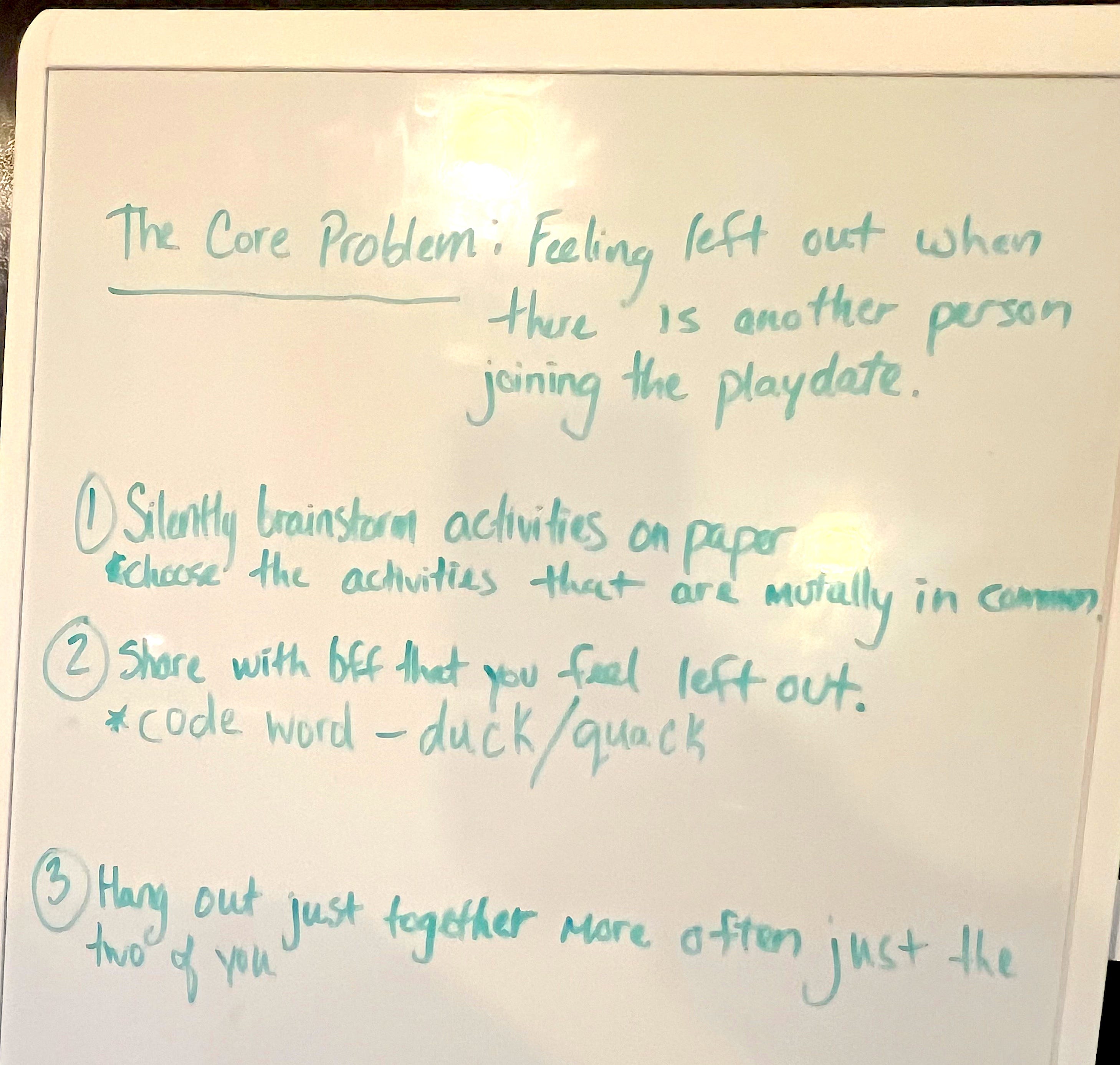
Space was held for the girls at a restaurant that was a favorite of April and her friend (common ground). Yes, a whiteboard came to dinner. Yes, journals too. The girls were mortified at first – who brings office supplies to dinner? But sometimes important conversations need simple tools. We’ve learned this from holding space in unconventional places.
The ground rules were simple:
Be calm
Use “I” statements
Be honest AND kind
Keep it real – ask “Would that really work?”
Then something unexpected happened. As the adults demonstrated how to have this conversation, their demonstration became real. They discovered they’d been so focused on their daughters that they’d neglected their own friendship. The girls watched two adults model vulnerability in real-time.
We call this “prepare to be surprised,” right? Sometimes the space you hold teaches you something you didn’t expect to learn.
The Discovery
When each girl reflected back on what she’d heard from the other, the surprise was this: They both felt the same thing. Excluded. Left out. Invisible when other friends joined their playdates.
They’d been experiencing the same pain from different angles. We see this in every community we’ve built – the same obstacle viewed from different vantage points.
Building Their Code
The girls retreated to their journals – no spell check, no judgment, just brainstorming. Then they shared. They tested ideas against that crucial question: “Would that really work?” (Tapping someone on the shoulder when feeling defensive? Probably not.)
Their solution reminded us of the simplicity we find in Open Space. They created a code:
Feeling left out? Say “duck.” The other responds “quack” – message received, support incoming.
Need backup with unkind friends? Say “cow.” The response of “moo” means “I’ve got your back.”
No drama. No confrontation. Just a quiet system of support between two friends navigating the complexity of growing up with diverging interests, but lasting care for each other.
The Deeper Pattern
What these girls discovered wasn’t just conflict resolution. They discovered how to hold space for friendship even as the container changes shape. They learned to separate intention from impact. They co-created rather than dictated. They built a bridge across divergence.
Professionally, we don’t persuade as coaches. Instead, we help people see that the bridge is possible and help them build it. This is what we do with individuals and teams in organizations to help them navigate crucial conversations. Tools like core protocols, working agreements, and signaling when the situation drifts outside those agreements.
After reflecting together on this experience, we realized: It’s sometimes easier to facilitate kids than adults. Empathy typically comes first. They don’t have a lifetime of assumptions in the way. Is it that adults just need permission to be this empathetic, this creative, this willing to build our own codes of support?
We’ve seen this in our work with organizations and communities. The most powerful connections often come from the simplest agreements.
Your Code of Support
Where in your life could you use a secret code?
With your team when someone feels unheard in meetings?
With your partner when one of you needs space?
With your community when someone needs to step back without disappearing?
What would your “duck/quack” be?
These ten-year-olds understood something we often forget in our adult complexities: Divergence doesn’t mean disconnection. Different paths can still have intentional crossing points. We just need to mark them clearly – even if it’s with something as simple as “moo.”
They didn’t just save a friendship. They discovered that holding space isn’t about keeping things the same. It’s about honoring what matters while allowing everything else to evolve. We see this as mobility in action – moving with intention even as the landscape shifts.
Could your relationships use this kind of intentional evolution?
What surprises might show up if you held space for the important conversations you’ve been avoiding?
Journeying in Mobility,
April & Mark