
Do We Have Enough Invitation?
Do we still feel "part of" something?


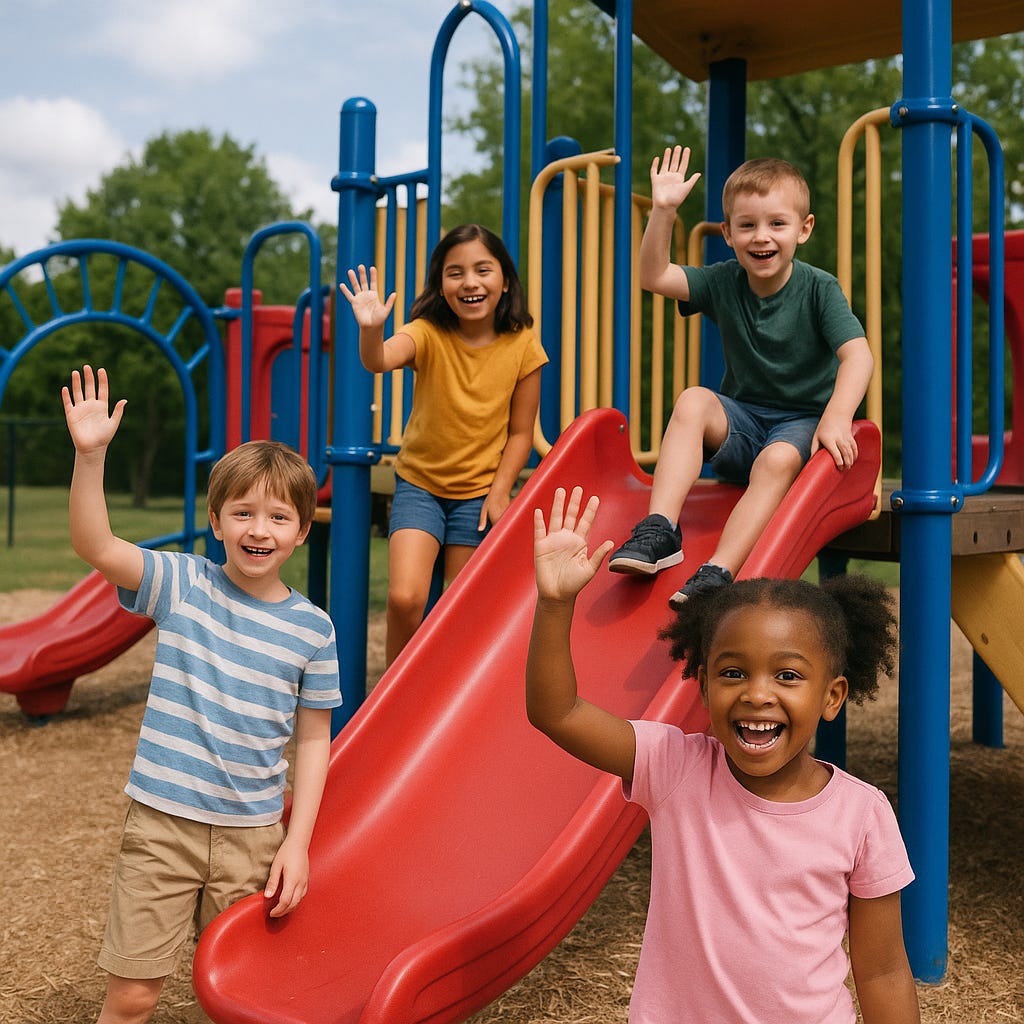
Remember the playground? You didn’t need instructions or an app to join in. A game of tag could spark to life in seconds. No icebreakers. No formalities. Just jump in.
As adults, we’ve lost this. We’ve forgotten how to simply invite people in.
The Cusper Perspective
We are both cuspers; people who span generations. We remember both analog and digital, landlines and smartphones. We’re boundary-walkers who’ve lived in both worlds, which makes us natural bridge-builders. But we’re cuspers on different boundaries, so we’re accustomed to including people with different experiences.
This gives us a unique view: We see what’s been lost between the playground and the conference room. Between childhood’s easy inclusion and adulthood’s careful procedures and unspoken rules.
Creating Adult Playgrounds
What are you curious about? Who might have experiences you haven’t? How can you invite them into a conversation with no formalities required?
This is the Open Space mindset we explore in this newsletter. It’s that spirit of self-organization where the right conversations emerge when you trust people to find each other. It’s about creating adult playgrounds where connection happens naturally.
Can you go beyond curiosity? Do you realize that you can learn from each other, even if they’re younger, even if they’re older? Maybe it’s starting a monthly potluck where teens teach sharing stories on TikTok, and elders teach how to better structure and share stories anywhere. Maybe it’s a walking group that mixes retirees with remote workers taking their lunch break.
We need more invitations to be “part of” something.
Building Together
Can you go beyond learning and actually build something together? A new group? An event that gathers curious people? A community that didn’t exist before?
When you do this, you don’t forget the elders. You don’t have kids forced down in the basement out of sight. You learn and celebrate together. Everyone becomes visible. Everyone joins in.
This visibility matters more than we realize. We see it starkly with people who are long-term unemployed. They vanish from view. People don’t see them, don’t hear them, and (strangest of all) stop calling them by name. They shift from being “part of” to being “apart from.”
The Simple Test
How do you know when you’re truly “part of” a group or community? Here’s a simple test: When you drop something, does someone automatically pick it up? When you see something someone else needs, do you just move into action?
You see them as equal. As part of you. They see you the same way. You are seen. They are seen. And people in the group will move into action when there is a need. No questions asked.
The Invitation Practice
So if you bump into someone you haven’t seen in a while, especially someone who might have become invisible, say hello. Use their name. Say something like “Hey [name], it’s great to see you.”
And instead of asking “How are you?” (which can lead to some dark reflection), try a different question. Mark has been experimenting with “What brings you joy these days?” That tends to pause the automatic response and make people really think. Just last week, Mark reconnected with an old high-school friend, Frank, and asked the question “What brings you joy these days?” Frank shared the story of another friend who recently went into the hospital with a grave illness. But the question sparked memories of all the wonderful things Frank and his friend had done together. We spent over two hours talking about those stories.
That question helps people remember what truly brings them joy. And more importantly, what they are still a “part of.”
Do we have enough invitation in our lives? Look around. How many people are waiting for someone to simply say, “Jump in”? How many playgrounds could we create if we remembered how to invite without instructions?
The answer starts with your next conversation.